Sleep health and bedding
How to Evaluate a Naturepedic Hybrid Mattress for Materials and Support
A hybrid mattress is a small collaboration among materials: some provide cushioning, some resist compression, and some help the bed keep its shape. To assess a Naturepedic option, look past the word “natural” and examine the model’s actual construction, certifications, support, care requirements, and fit with your sleep preferences.
There is a particular kind of promise in a mattress description. It suggests that a complicated object—one made to support the human body for hours at a time—can be understood through a handful of reassuring words: natural, organic, supportive. Those words may point toward useful qualities, but they do not tell the whole story. A mattress is a system of layers, and the details of those layers matter more than the adjective on the label.
That is especially true of a natural hybrid mattress. “Hybrid” usually means that a mattress combines different kinds of components, often a spring support unit with cushioning materials above it. Yet the term does not specify which materials are used, how thick each layer is, how the components are assembled, or what the finished bed will feel like. Models can differ, and specifications can change. For a Naturepedic mattress, the sensible first step is therefore not to infer its construction from the brand name or a general description of hybrids, but to inspect the documentation for the exact model and size under consideration.
The task is not to turn mattress shopping into a materials-science examination. It is to ask a sequence of practical questions: What is inside? What does each layer do? What, precisely, does a certification cover? How is the mattress supposed to be supported and cared for? And does the resulting combination make sense for the person who will sleep on it?
Start with the exact model, not the category name
Product families often contain multiple designs. A company may use the same broad terms—hybrid, organic, natural—for mattresses that differ in foam or fiber layers, spring construction, upholstery, firmness, thickness, or available features. It is easy to read one model’s specifications and unconsciously apply them to another. Resist that temptation. Find the full model name and the current technical details for the precise version you are evaluating.
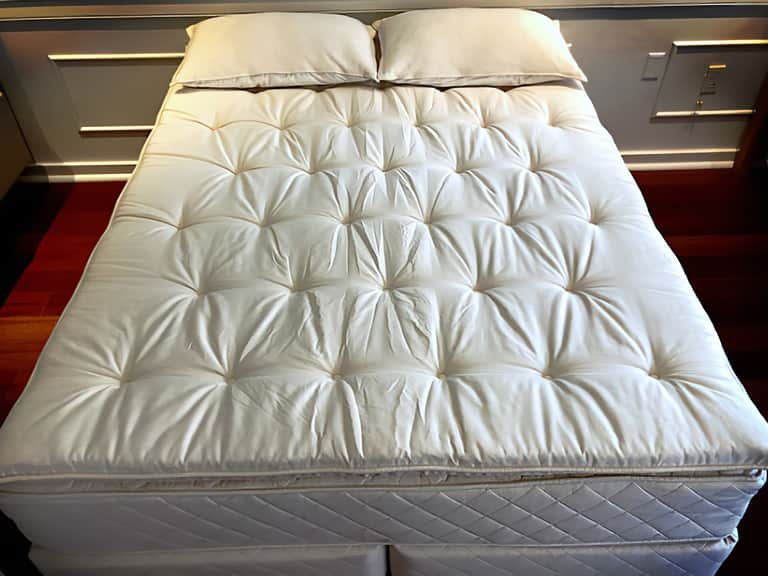
Look for a layer-by-layer description. A useful specification should identify the major materials and, where available, their position and thickness. If it lists a spring unit, find out whether the springs are individually wrapped, arranged in zones, or built in another configuration. If it lists latex, cotton, wool, or another cushioning material, note where it appears and whether it is part of the comfort layer, the support structure, or the cover. These distinctions matter because a material’s role depends on its place in the mattress, not merely its presence somewhere inside it.
When a description gives only a broad phrase such as “natural comfort layers,” ask for more detail. Which materials are included? Are they present in every size and firmness? Does the construction differ between models? A clear answer is not a demand for proprietary manufacturing secrets. It is the information a consumer needs to compare a bed with their priorities and to understand the claims being made.
Read material claims with a little patience
“Natural” is a broad descriptor, not a standardized recipe for a mattress. It does not, on its own, tell you the proportion of a material, whether a component is blended with other substances, how it was processed, or what other materials are present in the finished product. “Organic” is more specific when tied to a recognized standard and a clearly identified component, but it still needs context. A certified fabric, for example, does not automatically establish that every layer of the mattress is certified.
Make a short inventory as you read: comfort materials, support materials, cover, fire barrier or other required components, and any adhesives or treatments disclosed by the manufacturer. Not every product page will answer every question in the same place. The aim is to distinguish what is stated from what is assumed. If a claim applies only to a particular component, record that boundary rather than extending it to the whole mattress.
For people interested in organic mattress materials, traceability is more useful than a general impression of purity. Ask which organization certifies a material, what standard applies, and whether the certificate refers to the raw material, a textile, or the finished product. A certification can be meaningful while still having a defined scope. Understanding that scope makes it possible to compare claims fairly, without dismissing a legitimate standard or treating it as proof of something it was not designed to establish.
Also separate material preference from performance expectation. A natural or organic material may be important to a buyer for reasons of sourcing, processing, or personal values. Those characteristics do not, by themselves, predict whether the mattress will feel comfortable, sleep cool, last a particular number of years, or ease a health condition. Those are different questions, and they deserve different evidence.
Understand what certifications do—and do not—say
Certifications can help make a complicated supply chain more legible. They are not interchangeable, however, and their presence should prompt a closer look at what has actually been assessed. Check the certificate’s name, the certified entity or material, the relevant product or component, and whether the documentation is current. If a product page uses a certification logo without explaining its relationship to the mattress, consult the certifier’s own published standard or ask the manufacturer to clarify.
It is helpful to keep three questions separate:
- What is certified? The whole finished mattress, a particular textile, a material ingredient, or a manufacturing process?
- What does the standard assess? Its scope may concern organic sourcing, restricted substances, emissions, or another defined criterion.
- What does it not establish? A certificate is not a universal guarantee of comfort, durability, environmental impact, or suitability for every sleeper.
For the purpose of choosing a mattress, certification information is most useful when it sits beside a transparent materials list. Together, they help a reader connect the claim to the component it describes. If the page says a mattress contains a certified material, but does not identify where or how much, the claim may still be accurate; it is simply less useful for comparison.
Evaluate support as a system
Support is often treated as a synonym for firmness, though the two are not the same. Firmness is the subjective surface feel—plush, medium, firm, and the familiar variations between them. Support describes how the mattress holds the body and limits excessive sinking. A mattress can feel firm at first contact yet allow a sleeper’s hips to settle deeply. Another can feel gently cushioned while maintaining a stable, level sleeping surface. The words on a comfort scale are a starting point, not a verdict.
In a hybrid design, support may come from several cooperating parts: the spring unit, the materials above it, the mattress’s overall construction, and the foundation beneath it. Ask what the manufacturer means when it uses terms such as “zoned support” or “targeted support.” If zoning is claimed, find out which areas are treated differently and whether the feature is intended to affect the shoulder, lumbar region, hips, or another part of the body. Marketing language is easiest to assess when it is translated into a description of physical construction.
Consider your usual sleeping position, but do not treat position as destiny. Side sleepers commonly pay attention to pressure around the shoulders and hips; back sleepers may want a surface that feels stable beneath the pelvis and upper body; stomach sleepers often prefer to avoid excessive midsection sink. These are general considerations, not medical instructions. Body shape, weight, mobility, temperature preference, and personal comfort all change how a mattress feels.
If two people share a bed, each may experience the same mattress differently. One partner’s preference for a soft surface can coexist with another’s desire for a firmer feel. In that case, consider the brand’s available firmness options, trial arrangements, return conditions, and whether the mattress is designed to accommodate different preferences across the bed. Do not assume a hybrid will reduce motion transfer simply because it contains springs—or that it will amplify movement for the same reason. Construction details and the sleeper’s own experience are more informative than a category label.
Use a trial period as a structured test
A showroom visit can reveal an immediate impression, but it cannot reproduce a month of ordinary sleep. If a trial period is available, read its terms before purchase and use the time deliberately. Note how the mattress feels in your normal sleeping position, whether you wake with new or persistent discomfort, whether you feel too warm, and whether the bed remains comfortable as you change positions. Give yourself time to adjust to a new surface, while taking recurring problems seriously.
A simple sleep note can be more useful than an elaborate scoring system. Record the night, approximate position, comfort on waking, and any specific concern. This discourages the understandable habit of making a sweeping judgment after one restless night, when room temperature, stress, travel, or an unusual schedule may have had as much to do with sleep as the mattress.
Before relying on a trial, establish the practical conditions: how long it lasts, whether there is a required break-in period, what fees or pickup arrangements may apply, and what counts as acceptable use. Policies vary and can change. The current written terms, rather than a remembered summary or an old review, should guide your decision.
Check the foundation and the fit
A mattress does not perform in isolation. The base or frame can influence stability, ventilation, and how evenly the mattress is supported. Review the manufacturer’s requirements for slat spacing, center support, adjustable bases, or any other foundation guidance. A bed that feels uneven may not be telling you only about its own construction; the surface beneath it may be part of the story.
Measure the frame and the room before ordering. Confirm the mattress size, thickness, and any height added by a foundation or topper. Check that fitted sheets and protectors will fit the finished depth. If the mattress is heavy or has special handling instructions, consider how it will be carried upstairs, positioned, rotated if necessary, and maintained over time. The practicalities are not glamorous, but they have a habit of becoming important on delivery day.
Treat care instructions as part of the materials assessment
Care requirements reveal how a mattress is meant to be used. Find out whether it can be rotated, whether flipping is permitted, how the cover should be cleaned, and what kinds of liquids or cleaning agents should be avoided. Some covers are not removable or washable. Removing one without authorization can damage the mattress or affect warranty coverage. For a spill, follow the manufacturer’s instructions rather than improvising with steam, soaking, harsh chemicals, or a household remedy that may leave moisture deep in the layers.
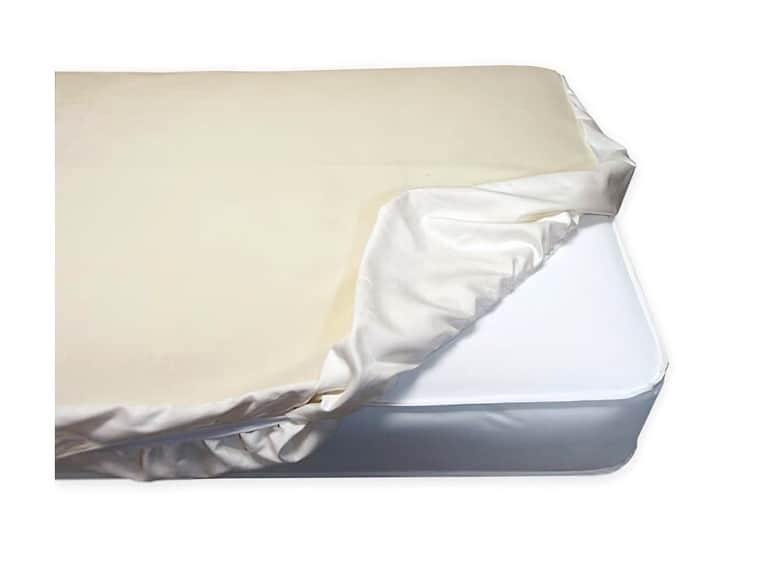
Use a protector if it is compatible with the mattress and does not interfere with its feel or airflow in a way you dislike. A washable protector can help limit exposure to sweat, skin oils, dust, and ordinary spills; it cannot make a mattress allergen-free, nor does it substitute for routine bedding care. Check its fit and washing instructions, then include it in the household laundry schedule.
Before purchase, read the warranty and distinguish a manufacturing defect from ordinary wear, a change in personal comfort, or damage caused by unsuitable cleaning or support. Look for the warranty’s duration, exclusions, proof-of-purchase requirements, and instructions about foundations. A long warranty may sound reassuring, but its practical value depends on what it covers and how a claim is assessed.
A practical comparison checklist
When comparing a Naturepedic hybrid mattress with another option, put the important facts side by side. This need not become a spreadsheet with seventeen columns; a page of notes is usually enough. The point is to compare like with like, not to let a polished description carry more weight than the actual specification.
- Write down the exact model name, size, firmness choice, and version date if available.
- List each disclosed layer, its material, and its stated function or position in the mattress.
- Record certifications and the specific components or claims they cover.
- Note support features, firmness descriptions, mattress height, and any construction details that are explained clearly.
- Check foundation requirements, care instructions, trial terms, delivery details, and warranty exclusions.
- Compare the mattress against your own comfort priorities rather than a universal claim about what a “good” sleeper should choose.
If one of these details is missing, that does not automatically make the mattress unsuitable. It does mean you have a question to resolve before relying on the claim. A concise inquiry can ask for the current layer breakdown, the scope of a named certification, or the exact foundation requirements for the model. Keep the answer with the product documentation; mattress specifications and policies are worth having in writing.
Questions worth asking before you decide
Clear answers tend to be concrete. Rather than asking whether a mattress is “truly natural,” ask which materials are used in each layer and which, if any, have independent certification. Rather than asking whether it is “good for your back,” ask how the model is constructed, what firmness options exist, and whether the manufacturer provides a trial period that lets you judge it in your own home. A company cannot determine your individual comfort from a product description, and a mattress should not be treated as a medical device unless it has been specifically established as one.
Questions to consider include:
- Does the listed construction apply to the exact size and firmness I am considering?
- Which materials are used for cushioning, support, and the outer cover?
- What does each certification cover, and where can I verify its scope?
- What foundation or slat configuration does the manufacturer require?
- How should the mattress be cleaned, protected, and rotated, if rotation is recommended?
- What are the current trial, return, delivery, and warranty terms?
The useful meaning of “natural”
There is no single shortcut from material origin to a satisfying night’s sleep. A natural hybrid mattress may appeal because of its material choices, its construction, or the values those choices represent. Those are legitimate reasons to investigate it. The investigation becomes more useful when each claim is attached to a particular layer, standard, or care instruction, rather than left floating above the bed like a pleasant but untestable impression.
Evaluating a Naturepedic mattress, then, is a matter of joining two forms of attention. The first is documentary: read the exact specification, verify what certifications apply to, and understand the maintenance and policy details. The second is personal: notice how the mattress feels under your own body, in your actual room, over enough time to separate a passing first impression from a durable preference.
The most convincing mattress is not necessarily the one with the longest list of reassuring terms. It is the one whose materials and support are described clearly, whose care demands fit your life, and whose feel suits the way you sleep. That is a less dramatic promise than “perfect rest.” It is also a more useful one.
Frequently asked questions
Does “hybrid” mean a mattress has a specific construction?
No. The term generally signals a combination of different materials or support elements, often springs with cushioning layers, but it does not specify the exact components or their arrangement. Check the model’s current layer-by-layer description.
Does an organic certification apply to the entire mattress?
Not necessarily. A certification may relate to a particular fiber, textile, ingredient, or production process. Read the certifier’s scope and the manufacturer’s documentation to see precisely which component or claim is covered.
Is a firmer mattress always more supportive?
No. Firmness describes how the surface feels, while support concerns how the mattress holds the body. They can influence each other, but they are not identical. Comfort also depends on sleep position, body shape, and individual preference.
Can a mattress certification guarantee better sleep?
A certification can substantiate a defined materials or processing claim; it does not guarantee that a mattress will feel comfortable or improve sleep for every person. Use certifications to evaluate claims, and use a suitable trial period to assess personal comfort.